
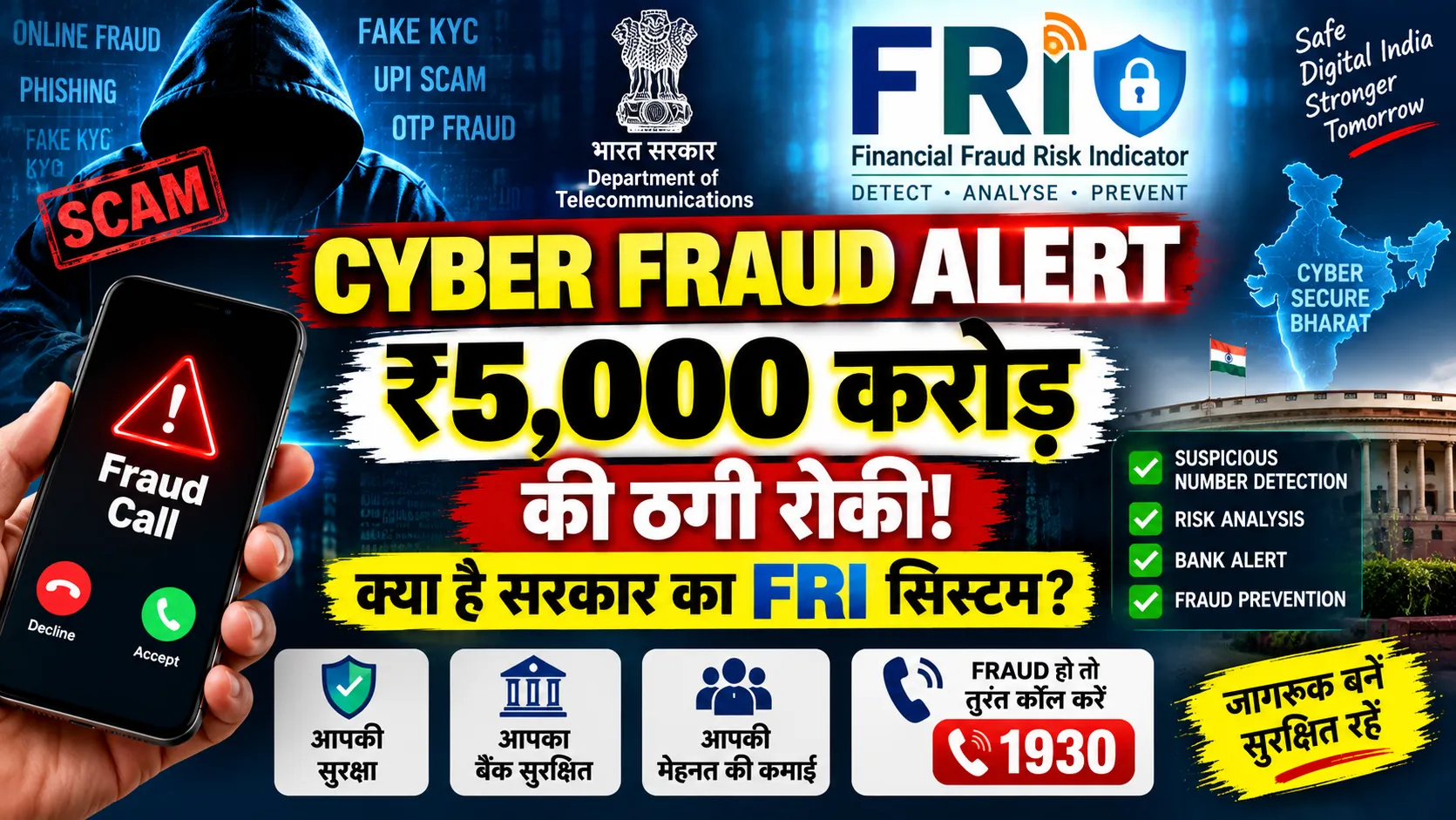
Online banking, UPI और digital payments ने पैसे भेजना जितना आसान बनाया है, cyber criminals ने ठगी के तरीके भी उतनी ही तेजी से बदले हैं। Fake KYC calls, WhatsApp scams, phishing links, fake investment schemes और fraud payment requests के जरिए लोगों को निशाना बनाया जा रहा है।
Thank you for reading this post, don't forget to subscribe!लेकिन इसी बीच भारत सरकार के एक cyber-fraud prevention system से बड़ी उपलब्धि सामने आई है।
Department of Telecommunications (DoT) के Financial Fraud Risk Indicator यानी FRI की मदद से अगस्त 2026 तक ₹5,043.73 करोड़ से अधिक के suspected cyber-fraud losses को रोकने में मदद मिली है।
सबसे महत्वपूर्ण बात यह है कि यहां बात fraud होने के बाद पैसे recover करने की नहीं है। सरकार के मुताबिक यह वह रकम है जिसे संदिग्ध fraud transactions में नागरिकों के account से निकलने से पहले रोकने में मदद मिली।
DoT ने Financial Fraud Risk Indicator (FRI) को 22 मई 2025 को launch किया था। केवल 15 महीनों में इसके जरिए ₹5,000 करोड़ से ज्यादा के संभावित cyber-fraud losses को रोकने में मदद मिलने का दावा सरकार ने किया है।
लेकिन आखिर FRI क्या है? यह आपके mobile number और bank transaction में fraud का खतरा कैसे पहचानता है? क्या आपका bank भी इसका इस्तेमाल कर सकता है? और अगर आपके साथ online fraud हो जाए तो तुरंत क्या करना चाहिए?
आइए आसान भाषा में पूरी जानकारी समझते हैं।
क्या है Financial Fraud Risk Indicator यानी FRI?
Financial Fraud Risk Indicator यानी FRI एक risk-assessment framework है जिसे Department of Telecommunications ने विकसित किया है।
इसका उद्देश्य financial institutions को यह समझने में मदद करना है कि किसी mobile number के financial fraud या cybercrime से जुड़े होने की कितनी संभावना है।
FRI किसी mobile number को risk के आधार पर तीन प्रमुख categories में classify कर सकता है:
Medium Risk
High Risk
Very High Risk
इसके बाद यह intelligence banks और दूसरे participating financial institutions के साथ साझा की जा सकती है ताकि suspicious transaction पर समय रहते अतिरिक्त सुरक्षा कदम उठाए जा सकें।
सरकार के अनुसार FRI, DoT के Digital Intelligence Platform (DIP) के तहत विकसित किया गया है।
₹5,043.73 करोड़ कैसे बचाए गए?
8 सितंबर 2026 की PIB/Ministry of Communications की आधिकारिक जानकारी के मुताबिक FRI की मदद से suspected cyber-fraud losses की रोकथाम में तेजी से बढ़ोतरी हुई है।
अगस्त 2025 तक cumulative prevented amount लगभग:
₹139.16 करोड़
था।
इसके बाद FRI को banks और payment platforms द्वारा ज्यादा अपनाए जाने के साथ यह आंकड़ा तेजी से बढ़ा।
सरकार के अनुसार शुरुआती छह महीनों में लगभग:
₹660 करोड़
के suspected fraud losses रोकने में मदद मिली थी।
लेकिन अगस्त 2026 तक यह आंकड़ा बढ़कर:
₹5,043.73 करोड़
हो गया।
इतना ही नहीं, सरकार के अनुसार अप्रैल 2026 से शुरू हुए केवल चार महीनों के दौरान ₹2,000 करोड़ से ज्यादा के suspected fraud losses को रोकने में मदद मिली।
यानी FRI का इस्तेमाल बढ़ने के साथ इसका financial fraud prevention में प्रभाव भी तेजी से बढ़ा है।
Fraud होने के बाद पैसा वापस नहीं, पहले ही रोकने की कोशिश
FRI की सबसे महत्वपूर्ण बात यही है।
आमतौर पर cyber fraud में क्या होता है?
Victim के account से पैसा निकल जाता है।
उसके बाद व्यक्ति bank को फोन करता है।
Cyber Crime Helpline पर शिकायत करता है।
Transaction trace करने की कोशिश होती है।
Fraudulent account को freeze कराने की प्रक्रिया शुरू होती है।
और फिर पैसा वापस मिलने की कोशिश की जाती है।
FRI का approach इससे अलग है।
इसका उद्देश्य transaction होने से पहले ही available risk signals के आधार पर financial institution को संभावित खतरे के बारे में intelligence उपलब्ध कराना है।
इससे bank या payment platform applicable system और policy के अनुसार warning, transaction delay, additional verification या transaction decline जैसे protective measures अपना सकता है।
यानी concept है:
Fraud होने के बाद recovery से बेहतर है fraud होने से पहले रोकना।
FRI किसी Mobile Number को Risky कैसे पहचानता है?
यह सवाल सबसे दिलचस्प है।
DoT के मुताबिक FRI की classification कई sources से मिलने वाले inputs के आधार पर तैयार होती है।
इनमें शामिल हो सकते हैं:
Sanchar Saathi platform पर citizens द्वारा की गई reports
Indian Cybercrime Coordination Centre (I4C) के National Cybercrime Reporting Portal से मिलने वाले inputs
Telecom operators की intelligence
Banks और financial institutions से मिलने वाली information
और अन्य telecom-related parameters।
इन signals का analysis करके किसी mobile number को financial fraud से जुड़े होने के संभावित risk के आधार पर Medium, High या Very High category में रखा जा सकता है।
इसका मतलब यह नहीं कि हर flagged number को automatically अपराधी घोषित कर दिया जाता है।
FRI मूल रूप से risk indicator है—यानी financial institution को extra caution और protective action लेने में मदद करने वाला signal।
Bank को FRI से क्या फायदा होता है?
मान लीजिए किसी व्यक्ति को fraudster call करता है।
Fraudster कहता है:
“आपका KYC expire हो गया है।”
या:
“आपके account में refund भेजना है।”
या:
“आपने lottery जीती है।”
इसके बाद fraudster victim को किसी particular number/account/payment route पर पैसे भेजने के लिए manipulate करता है।
अगर transaction से जुड़ा mobile number FRI system में High या Very High risk signal से associated है, तो participating financial institution अतिरिक्त security response लागू कर सकता है।
PIB के 8 सितंबर 2026 के अपडेट के अनुसार banks और UPI service providers FRI intelligence का उपयोग high और very high-risk mobile number से जुड़ी transactions को real time में stop या flag करने के लिए कर रहे हैं।
किसी transaction पर संस्थान का exact action उसकी अपनी fraud-control प्रक्रिया पर निर्भर करता है; आधिकारिक अपडेट में ऐसे transactions को stop या flag करने की बात कही गई है।
इससे victim को transaction complete होने से पहले सोचने या fraud detect होने का अतिरिक्त मौका मिल सकता है।
Digital Intelligence Platform क्या है?
FRI को समझने के लिए Digital Intelligence Platform यानी DIP को भी समझना जरूरी है।
DIP Department of Telecommunications का intelligence-sharing platform है, जिसके जरिए telecom-related fraud intelligence relevant stakeholders के साथ साझा की जाती है।
8 सितंबर 2026 की सरकारी जानकारी के मुताबिक 1,600 से अधिक organisations Digital Intelligence Platform से जुड़ चुके हैं।
इसके ecosystem में banks, financial institutions, payment service providers, insurers, securities intermediaries और pension-sector entities जैसे stakeholders शामिल हो सकते हैं।
सरकार ने यह भी बताया कि 1,500 banks, financial institutions और regulators के लिए 25 से ज्यादा training sessions आयोजित किए गए हैं।
इसका उद्देश्य cyber-fraud prevention ecosystem को ज्यादा coordinated बनाना है।
Cyber Criminals के खिलाफ Mobile Number क्यों महत्वपूर्ण है?
Digital fraud में mobile number कई बार एक महत्वपूर्ण link बन जाता है।
Fraudsters mobile numbers का इस्तेमाल:
Fake customer-care calls,
KYC scams,
WhatsApp messages,
Investment fraud,
Loan fraud,
UPI payment requests,
Phishing communication
और social-engineering attacks में कर सकते हैं।
अगर एक ही number के खिलाफ कई credible reports और intelligence signals आने लगें, तो वह fraud-prevention systems के लिए महत्वपूर्ण risk signal बन सकता है।
FRI इसी telecom intelligence को financial ecosystem के लिए actionable बनाने की कोशिश करता है।
क्या FRI आम लोगों के Phone में कोई App है?
नहीं।
FRI को ऐसे consumer app के रूप में नहीं समझना चाहिए जिसे आपको Play Store से download करना हो।
यह primarily financial institutions और संबंधित stakeholders के लिए risk-intelligence framework है।
इसलिए अगर कोई व्यक्ति आपको फोन करके कहता है:
“FRI App install करो”
या
“आपका FRI verification pending है, यह APK download करो”
तो बेहद सावधान रहें।
सरकार के FRI system के नाम पर किसी unknown APK, remote-access app या suspicious link को install करने की जरूरत नहीं है।
क्या FRI हर Cyber Fraud रोक सकता है?
नहीं।
₹5,000 करोड़ से ज्यादा की रोकथाम का आंकड़ा बड़ा है, लेकिन इसका अर्थ यह नहीं कि अब भारत में होने वाला हर cyber fraud automatically रुक जाएगा।
FRI एक risk-based preventive system है।
Cyber criminals लगातार नए:
Mobile numbers,
Bank accounts,
Mule accounts,
Social-media profiles,
Websites,
Apps
और social-engineering techniques इस्तेमाल कर सकते हैं।
इसलिए technology-based fraud prevention के साथ user awareness अभी भी बेहद जरूरी है।
इन Cyber Frauds से सबसे ज्यादा सावधान रहें
आज online fraud केवल OTP मांगने तक सीमित नहीं है।
Fake KYC Call
Fraudster खुद को bank, telecom company या किसी सरकारी agency का कर्मचारी बताकर कह सकता है कि KYC update नहीं किया तो account या SIM बंद हो जाएगा।
इसके बाद link या app के जरिए financial information चुराने की कोशिश की जाती है।
Digital Arrest Scam
Fraudster खुद को police, CBI, customs या किसी दूसरी authority का अधिकारी बताकर victim को डराता है।
फिर जांच, arrest या case से बचाने के नाम पर पैसे transfer करने का दबाव बनाया जा सकता है।
Fake Investment Scam
Social media या messaging apps पर बहुत ज्यादा return का लालच देकर investment कराया जाता है।
शुरुआत में fake profit दिखाकर विश्वास बनाया जा सकता है और बाद में बड़ी रकम फंसा दी जाती है।
Fake Customer Care Number
Google या social media पर fake customer-care number डालकर लोगों को फंसाया जाता है।
Victim मदद के लिए फोन करता है और fraudster banking details या payment करवाने की कोशिश करता है।
UPI Collect Request Fraud
किसी बहाने से UPI collect request भेजी जाती है और victim से PIN डालने को कहा जाता है।
याद रखें—पैसे receive करने के लिए सामान्य तौर पर UPI PIN डालने की जरूरत नहीं होती।
WhatsApp और Malicious File Scam
Cyber criminals WhatsApp पर fake documents, account statements या दूसरे आकर्षक/urgent files भेजकर malware फैलाने की कोशिश कर सकते हैं।
अगस्त 2026 में I4C ने professionals और businesses को ऐसे malicious files के जरिए WhatsApp account takeover और high-value financial fraud के एक अभियान को लेकर भी चेतावनी दी थी।
Cyber Fraud हो जाए तो सबसे पहले क्या करें?
अगर आपके account से fraud के जरिए पैसा निकल गया है तो सबसे महत्वपूर्ण चीज है:
समय बर्बाद न करें।
National Cyber Crime Reporting Portal financial cyber fraud की immediate reporting के लिए 1930 helpline उपलब्ध कराता है।
इसलिए unauthorized transaction दिखाई देते ही:
1. तुरंत अपने Bank/Payment Service Provider को inform करें।
Bank के official customer-care channel का इस्तेमाल करें और transaction को unauthorized बताएं।
2. तुरंत 1930 पर call करें।
यह National Cyber Crime Helpline है।
3. National Cyber Crime Reporting Portal पर complaint दर्ज करें।
Complaint process को जितनी जल्दी पूरा करेंगे, उतना बेहतर है।
4. Transaction details सुरक्षित रखें।
UPI ID, Transaction ID, bank account details, amount, date/time और संबंधित screenshots संभालकर रखें।
5. Fraudster के messages delete न करें।
WhatsApp chat, SMS, email, phone number और suspicious link evidence के तौर पर काम आ सकते हैं।
Cyber Fraud में जल्दी Report करना क्यों जरूरी है?
RBI की consumer guidance भी unauthorized electronic transaction दिखाई देने पर bank को तुरंत report करने पर जोर देती है।
देरी होने पर नुकसान सीमित करने या पैसे रोकने की संभावना प्रभावित हो सकती है।
इसीलिए fraud detect होने के बाद पहले social media पर post लिखने या दोस्तों से लंबी चर्चा करने के बजाय bank और cybercrime authorities को तुरंत सूचना देना ज्यादा जरूरी है।
हर मिनट महत्वपूर्ण हो सकता है।
1930 पर Complaint करते समय क्या जानकारी तैयार रखें?
Financial cyber fraud report करते समय निम्न information अपने पास रखना उपयोगी हो सकता है:
आपका mobile number
Bank/Wallet/Merchant का नाम
Account/Wallet/UPI से संबंधित details
Transaction ID
Transaction की date
Fraud amount
Transaction screenshot
और fraud से जुड़े अन्य evidence।
Sensitive information केवल authorised channel पर ही दें।
किसी random caller को OTP, PIN, CVV या banking password कभी न बताएं।
Suspicious Number या Link की भी Report कर सकते हैं
अगर आपके साथ अभी fraud नहीं हुआ है, लेकिन कोई suspicious:
Website URL,
WhatsApp Number,
Telegram Handle,
Phone Number,
Email ID,
SMS Header
या Social Media URL
मिला है, तो National Cyber Crime Reporting Portal पर उपलब्ध Report Suspect facility के जरिए इसकी सूचना दी जा सकती है।
ऐसी reports cybercrime intelligence repository बनाने और suspicious infrastructure की analysis/monitoring में मदद कर सकती हैं।
यह preventive reporting FRI जैसे systems के लिए भी व्यापक ecosystem का महत्वपूर्ण हिस्सा बन सकती है।
Sanchar Saathi पर भी Suspicious Communication Report किया जा सकता है
DoT का Sanchar Saathi ecosystem suspicious communication से संबंधित citizen reports को cyber-fraud intelligence में उपयोग कर सकता है।
इसलिए fraud attempt होने के बावजूद “पैसा नहीं गया, इसलिए report करने की जरूरत नहीं” वाली सोच सही नहीं है।
Suspicious calls/messages की reporting आगे दूसरे लोगों को fraud से बचाने में उपयोगी हो सकती है।
Bank Account किराए पर देना भी बन सकता है बड़ी मुसीबत
Cyber criminals को fraud के पैसे receive और आगे transfer करने के लिए bank accounts की जरूरत होती है।
इन्हें अक्सर Money Mule Accounts कहा जाता है।
RBI लोगों को चेतावनी देता है कि किसी दूसरे व्यक्ति को अपने bank account का इस्तेमाल उसके पैसे receive या transfer करने के लिए न करने दें।
अगर कोई कहे:
“अपने account में ₹1 लाख receive करो, ₹5,000 commission रख लेना और बाकी आगे भेज देना”
तो यह गंभीर red flag है।
आपका account cyber-fraud chain में इस्तेमाल हो सकता है और बाद में investigation में आप भी फंस सकते हैं।
Cyber Fraud से बचने के 10 जरूरी नियम
1. OTP किसी को न बताएं।
Bank या genuine institution को आपके OTP की जरूरत नहीं होती।
2. UPI PIN केवल पैसे भेजने/authorise करने के समय डालें।
पैसे receive करने के नाम पर PIN डालने से पहले transaction screen ध्यान से पढ़ें।
3. Unknown APK install न करें।
WhatsApp या SMS से आए APK files से विशेष सावधानी रखें।
4. Remote-access apps से सावधान रहें।
किसी unknown caller के कहने पर screen-sharing या remote-control app install न करें।
5. Google Search से मिले customer-care number को blindly trust न करें।
Company/bank की official website या app से number लें।
6. QR Code scan करने से पहले उद्देश्य समझें।
“पैसा receive करने के लिए QR scan करो” जैसे claims suspicious हो सकते हैं।
7. Investment में guaranteed high return से सावधान रहें।
बहुत कम समय में असामान्य return का वादा बड़ा red flag है।
8. Bank alerts ON रखें।
हर debit transaction का SMS/app notification ध्यान से देखें।
9. Banking limits जरूरत के अनुसार रखें।
बहुत ज्यादा transaction limits रखने की जरूरत न हो तो उन्हें नियंत्रित रखना नुकसान सीमित करने में मदद कर सकता है।
10. Fraud होते ही 1930 और Bank को report करें।
देरी न करें।
FRI की सफलता आम नागरिक के लिए क्यों महत्वपूर्ण है?
₹5,043.73 करोड़ केवल एक बड़ा सरकारी आंकड़ा नहीं है।
इस initiative का असली महत्व यह है कि cyber-fraud prevention धीरे-धीरे reactive model से preventive model की तरफ बढ़ रहा है।
पुराना model:
Fraud हुआ → पैसा गया → शिकायत → investigation → recovery की कोशिश
FRI जैसे systems का लक्ष्य:
Risk signal मिला → transaction के समय warning/action → संभावित fraud को पहले रोकने की कोशिश
अगर banks, payment systems, telecom companies और law-enforcement intelligence तेजी से एक-दूसरे के साथ काम करते हैं, तो cyber criminals के लिए fraud करना ज्यादा मुश्किल हो सकता है।
FRI से जुड़े Frequently Asked Questions
FRI का Full Form क्या है?
FRI का full form Financial Fraud Risk Indicator है।
FRI किसने बनाया है?
इसे भारत सरकार के Department of Telecommunications (DoT) ने Digital Intelligence Platform के तहत विकसित किया है।
FRI कब Launch हुआ?
सरकारी जानकारी के अनुसार इसे 22 मई 2025 को launch किया गया।
FRI ने कितने पैसे बचाए हैं?
DoT के अनुसार अगस्त 2026 तक FRI के उपयोग से ₹5,043.73 करोड़ से अधिक के suspected cyber-fraud losses को रोकने में मदद मिली है।
क्या ₹5,043 करोड़ fraud होने के बाद recover किए गए?
नहीं। सरकारी जानकारी का मुख्य point यही है कि यह रकम suspected fraud transactions में नागरिकों के accounts से निकलने से पहले रोकने में मदद मिली, न कि fraud के बाद पूरी रकम recover की गई।
FRI Mobile Number को कैसे classify करता है?
Risk assessment के आधार पर mobile numbers को Medium, High और Very High Risk categories में classify किया जा सकता है।
क्या FRI कोई Mobile App है?
नहीं। यह आम consumer के लिए download करने वाला app नहीं बल्कि financial institutions के लिए risk-intelligence framework है।
Cyber Fraud होने पर किस Number पर Call करें?
Financial cyber fraud की immediate reporting के लिए National Cyber Crime Helpline 1930 उपलब्ध है।
Online Cyber Crime Complaint कहां करें?
National Cyber Crime Reporting Portal के जरिए online complaint दर्ज की जा सकती है।
क्या Suspicious Number को भी Report कर सकते हैं?
हां। National Cyber Crime Reporting Portal पर suspicious phone numbers, WhatsApp numbers, Telegram handles, websites, email IDs और दूसरे identifiers की reporting के लिए facility उपलब्ध है।
सबसे जरूरी बात याद रखें
FRI जैसे systems cyber fraud के खिलाफ सुरक्षा की एक अतिरिक्त layer हैं, लेकिन कोई भी technology आपकी अपनी सावधानी की जगह नहीं ले सकती।
अगर कोई व्यक्ति आपको:
जल्दी पैसे भेजने,
OTP बताने,
UPI PIN डालने,
unknown app install करने,
screen share करने,
या investment के नाम पर guaranteed profit देने
का दबाव डाल रहा है तो transaction रोककर पहले verify करें।
Cyber fraud में सबसे प्रभावी सुरक्षा कई बार केवल कुछ सेकंड रुककर सोच लेना होती है।
अंत में जाते-जाते
भारत में बढ़ते digital transactions के बीच Financial Fraud Risk Indicator (FRI) cyber-fraud prevention का महत्वपूर्ण tool बनकर सामने आया है।
Department of Telecommunications के मुताबिक 22 मई 2025 को launch होने के बाद अगस्त 2026 तक FRI ने ₹5,043.73 करोड़ से ज्यादा के suspected cyber-fraud losses को रोकने में मदद की है। शुरुआती छह महीनों में यह आंकड़ा लगभग ₹660 करोड़ था, जिससे पता चलता है कि banks और payment platforms में system का adoption बढ़ने के साथ prevention भी तेजी से बढ़ा है।
लेकिन FRI को cyber fraud के खिलाफ पूर्ण guarantee नहीं समझना चाहिए।
OTP, UPI PIN, suspicious links, unknown APK files, fake KYC calls, investment scams और digital-arrest जैसे fraud से बचने के लिए user awareness अभी भी सबसे जरूरी है।
अगर आपके साथ financial cyber fraud हो जाए तो तुरंत अपने bank को inform करें और National Cyber Crime Helpline 1930 पर report करें। जितनी जल्दी fraud report होगा, नुकसान को रोकने की संभावना उतनी बेहतर हो सकती है।
यह भी देखें: WhatsApp पर आने वाली suspicious files और सुरक्षित phone use के लिए WhatsApp Android support और सुरक्षा गाइड पढ़ें।
ताज़ा cyber-safety updates के लिए हमारा WhatsApp Channel join करें।
Disclaimer: यह लेख सामान्य जानकारी और cyber-safety awareness के उद्देश्य से तैयार किया गया है। इसमें दी गई FRI संबंधी जानकारी भारत सरकार के Department of Telecommunications/PIB तथा cyber-fraud reporting संबंधी जानकारी National Cyber Crime Reporting Portal और RBI की उपलब्ध official guidance पर आधारित है। किसी financial fraud की स्थिति में अपने bank, payment provider, police/cybercrime authorities और संबंधित official government channels से तत्काल संपर्क करें।